Repair TipsLocal Guides
Why Does My Water Heater Make Noise?
Popping, rumbling, banging or humming from your water heater? Here is what each sound means, what it costs to fix in Aliso Viejo, and when to call us.
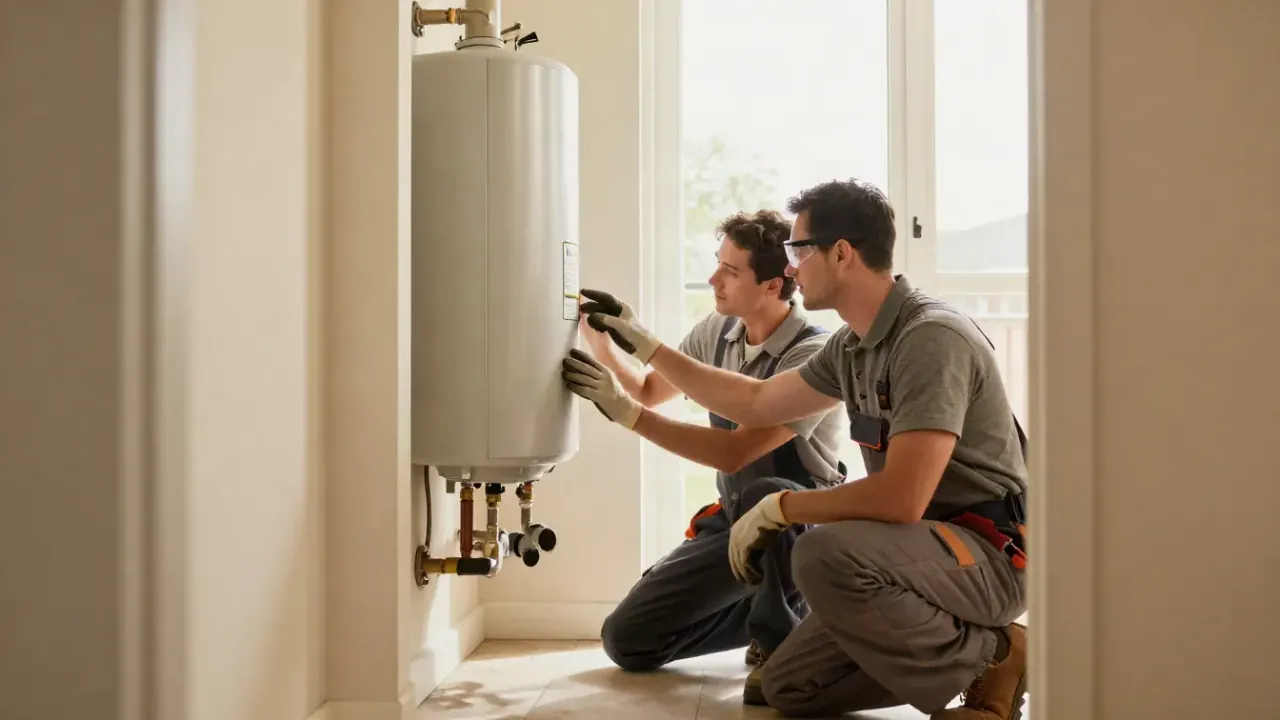
A noisy water heater almost always means mineral sediment has built up on the bottom of the tank, and the boiling water underneath it is popping and rumbling as it tries to escape. That is the answer for roughly eight out of ten noisy tanks we open in Aliso Viejo. The rest split between a failing heating element, a worn dip tube, a scaled tankless unit, or a loose gas valve that hums or whistles. Below we break down each sound, what causes it, what it costs to fix in 2026, and the point where you should stop guessing and have someone look at it.
The Short Answer: What Each Sound Means
Why does my water heater make noise Aliso Viejo CA homeowners ask about is a question with a sound-to-cause map, and once you know the map you can usually diagnose your own tank in under a minute.
- Popping or crackling - sediment on the tank floor. Most common cause by a wide margin.
- Rumbling or a low roar - the same sediment, but a thicker layer, usually 2-4 inches deep.
- Banging or hammering - trapped steam under a hardened scale crust, or water hammer in the line itself.
- Humming or buzzing - a failing heating element, a loose gas valve, or a recirculation pump.
- Whining or whistling - restricted flow through a scaled tankless heat exchanger or a partially closed valve.
- Ticking or tapping - expanding metal as the tank heats, usually harmless.
If you want the one-line version: sediment causes the loud noises, mechanical parts cause the quiet ones, and quiet noises are often the more urgent of the two.
Why Does My Water Heater Make a Popping Sound in Aliso Viejo CA?
A water heater popping sound Aliso Viejo CA residents describe is boiling water trapped under a layer of calcium carbonate that has settled on the tank floor. Aliso Viejo's water runs hard - our suppliers pull from the same Colorado River and local groundwater blend that feeds most of south Orange County, and we routinely measure 8 to 12 grains per gallon at the tap. Every gallon that enters your tank leaves a little calcium and magnesium behind when it heats. Over two or three years that becomes a crust. Over five it becomes a floor.
Here is the mechanism. Your burner or lower element fires and heats the steel floor of the tank. Where the floor is bare steel, heat transfers into the water and it boils normally. Where the floor is covered in scale, the heat has to push through an insulating layer first. Water gets superheated under the crust, then bursts through in a bubble. That burst is the pop you hear. Multiply it by thousands of bubbles per heating cycle and you get the crackling, popcorn-in-a-pot sound that wakes people up at 5 a.m.
Popping is not an emergency on day one. It is a warning that the tank is working harder than it should, that your gas bill is creeping up, and that the steel floor is being cooked at higher-than-design temperatures. Left alone for years, that is how tanks fail from the bottom.
Rumbling and Banging: Sediment, Scale and Hard Water
A water heater rumbling noise Aliso Viejo California homeowners hear is the same sediment problem one stage further along. When the scale layer gets thick enough - usually past the two-inch mark - the bubbles cannot escape cleanly anymore. They collect, merge, and release as a low roar that sounds like a distant jet or a pot about to boil over.
Banging is the next step up. When the crust hardens into a shell, steam pockets form underneath and collapse violently against the tank wall. That is the water heater making loud banging noise Aliso Viejo calls about most often in the fall, right after the first cool nights push the tank into longer heating cycles.
Two things make this worse here specifically. First, Aliso Viejo has a lot of 1990s and early-2000s housing stock where the original tanks have already been replaced once and the second tank is now five to eight years old. Second, we see an unusual number of homes with pressure-reducing valves set above 80 psi, which accelerates scale deposition and puts extra stress on the tank seams. If your tank rumbles and your showerhead has been losing pressure for months, those two facts are related.
Rumbling and popping Aliso Viejo California tanks that have never been flushed are the single easiest repair we do. A full drain-down, a wand flush at 120 psi, and a fresh anode rod will quiet a rumbling tank in about 90 minutes. Typical 2026 pricing in this area runs $185 to $320 depending on tank size and how much scale we pull out. We handle that as part of our Water Heater Flush Aliso Viejo CA service, and we will tell you honestly if the tank is too far gone to be worth flushing.
Humming, Whining and Ticking: Mechanical Causes
A water heater humming noise Aliso Viejo residents report is almost never sediment. Humming comes from something vibrating - an electric element that has developed a pinhole leak in its sheath, a gas control valve with a loose internal diaphragm, or a recirculation pump mounted without isolation pads. If the hum is loud enough to hear from the next room, the element or valve is usually on its way out.
Whining and whistling point to flow restriction. In a tankless unit, that is scale inside the heat exchanger narrowing the passage the water has to squeeze through. In a tank unit, it is usually a partially closed supply valve or a dip tube that has cracked and is dumping cold water into the hot outlet.
Ticking is the one sound you can safely ignore. Metal expands when it heats and contracts when it cools, and a tank that ticks for 30 seconds after the burner shuts off is behaving normally. If the ticking turns into a rhythmic tap that continues after the burner is off, that is a different problem - usually a check valve or a loose pipe strap.
For tankless owners, the fix for whining is a descale, not a replacement. Our Tankless Water Heater Flush Aliso Viejo CA service runs a food-grade descaling solution through the heat exchanger for 45 to 60 minutes and restores flow. In hard-water areas like ours, that should happen every 12 months, not every three years.
Is a Noisy Water Heater Dangerous?
A popping water heater is not dangerous by itself, but it is a leading indicator of two failures that are: a cracked tank floor and a failed anode rod. Both lead to leaks, and a leaking tank in a second-floor closet or an attic space can cause thousands of dollars in drywall and flooring damage before you notice it.
The sounds that warrant same-day attention are different from the sounds that warrant a service call this month.
- Call today: banging loud enough to feel through the floor, a hissing sound near the gas valve, any noise paired with water pooling at the base, or a popping tank that is over 10 years old.
- Call this week: steady rumbling, popping that has gotten noticeably louder over the past month, or a hum that started suddenly.
- Monitor: light ticking after shutdown, a faint pop on the first heating cycle of the morning.
One more safety note specific to gas tanks. If you smell gas - not the faint odor of a pilot, but a real sulfur smell - shut the gas off at the valve and call the utility first, then call us. Noise and gas odor together is not a repair, it is an evacuation.
How to Stop the Noise: What Actually Works
How to fix noisy water heater Aliso Viejo problems comes down to three real options, and one of them is not a repair at all.
- Flush the tank and replace the anode rod. This is the fix for popping and rumbling. Drain the tank completely, break up the scale with a high-pressure wand through the drain valve, refill, and install a fresh magnesium or aluminum anode. Cost: $185-$320. Result: quiet tank, better recovery time, and two to four more years of service.
- Replace the failed component. A humming electric tank usually needs a new lower element and sometimes a thermostat - $220 to $410 installed. A humming gas tank usually needs a new gas control valve - $280 to $480. A whistling tankless unit needs a descale - $165 to $260.
- Replace the tank. If the tank is over 12 years old, has a rusted floor, or the scale layer is thick enough that we can hear chunks rattling when we drain it, flushing is throwing money at a dead tank. A standard 50-gallon gas replacement runs $1,450 to $2,300 installed in 2026, and a tankless replacement runs $2,800 to $4,200 depending on venting and gas line size.
What does not work: turning the thermostat down to mask the noise, wrapping the tank in a blanket to muffle it, or ignoring it until the tank leaks. All three just move the failure date closer without changing the outcome.
Common Mistakes We See in Aliso Viejo Homes
We open a lot of tanks in this city, and the same four mistakes come up again and again.
Flushing once and calling it done. In hard water, one flush buys you 12 to 18 months of quiet. Then the scale starts rebuilding. Annual maintenance is the difference between a tank that lasts 12 years and one that lasts seven.
Replacing the anode rod with the wrong metal. Aluminum anodes are cheaper and they work, but in our water they can leave a sulfur smell. Magnesium is the better choice here, and it costs about $30 more.
Ignoring the pressure-reducing valve. If your home's water pressure is running above 80 psi, you are cooking your tank. A $250 PRV replacement saves tanks.
Assuming a new tank will be quiet. A brand-new tank installed on a hard-water line will start popping within 24 months if nobody flushes it. The noise is a maintenance signal, not a manufacturing defect.
We see this pattern across the whole city, and it shows up in specific neighborhoods. In the older single-family tracts around Water Heater Repair in Westridge, most of the tanks we service are second-generation replacements now hitting the six-to-eight-year mark, which is exactly when sediment noise peaks. Over in Water Heater Repair in Glenwood, we run into more tankless conversions from the last decade, and those units need descaling on a strict annual schedule or they start whining by year three.
When to Call a Professional
Call us when the noise has changed character, when it is paired with any water at the base of the tank, or when the tank is past its tenth birthday. Those three conditions cover almost every case where a DIY flush turns into a same-week replacement.
We are a local, state-licensed plumbing contractor working out of Aliso Viejo, and we see the same hard-water pattern in every neighborhood we service. Our technicians diagnose the noise, tell you what it will cost before we start, and either quiet the tank or tell you straight that it is time to replace it. No guesswork, no upsell on a tank that has years left in it.
If you would rather not crawl around a water heater closet on a Saturday, that is what we are here for. We handle everything from Water Heater Leak Repair Aliso Viejo CA to full replacements, and we can usually get to a noisy tank within a day or two.
Frequently Asked Questions
Why does my water heater make noise in Aliso Viejo CA?
Sediment. Aliso Viejo's water runs 8-12 grains per gallon hard, so calcium and magnesium settle on the tank floor within two to three years and trap boiling water underneath. That trapped steam pops and rumbles as it escapes. Mechanical causes like a failing element or gas valve account for the rest.
Is a popping water heater dangerous in Aliso Viejo?
Not immediately, but it is a warning. Popping means the tank floor is being overheated under a scale layer, which accelerates corrosion and shortens tank life by three to five years. The real danger is the leak that follows, especially in second-floor or attic installations.
How do I stop water heater popping noise in Aliso Viejo California?
Drain and flush the tank, then replace the anode rod. That removes the scale layer causing the pop and typically restores quiet operation for 12 to 18 months. In our water, expect to repeat the flush annually. Cost runs $185 to $320.
What causes water heater rumbling in Aliso Viejo CA?
A thick sediment layer - usually two inches or more - that traps steam pockets and releases them as a low roar. Rumbling is the same problem as popping, one stage further along. A professional flush at 120 psi clears it in about 90 minutes.
Should I worry about water heater banging noise in Aliso Viejo?
Yes, get it checked within a few days. Banging usually means a hardened scale shell is trapping steam against the tank wall, or you have water hammer in the supply line. Both stress the tank seams and fittings. If the banging is loud enough to feel through the floor, call same-day.
Get Help with Water Heater Repair in Aliso Viejo
If your tank is popping, rumbling, banging or humming, we can diagnose it, flush it, or replace it - and we will tell you which one you actually need. We serve every neighborhood in Aliso Viejo and the surrounding south Orange County cities, and we quote the price before we start the work.
Call Aliso Viejo Water Heater Repair at (949) 619-8763 and we will get your water heater quiet again.